Why relaxation matters for the mind
Modern life runs on a strange contradiction. We have more convenience, more technology and more ways to save time than any generation before us, yet many people feel permanently over-stimulated, mentally scattered and quietly exhausted. That is why relaxation and mental wellbeing are no longer treated as a soft lifestyle extra, but as a practical part of staying functional. Relaxation is not idleness. It is a deliberate shift out of performance mode and into recovery. When you make regular space for calm, the benefits often reach far beyond a pleasant hour - sleep improves, concentration steadies, and everyday pressure becomes easier to handle.
Recent evidence supports that view. A Wellcome Trust report reviewing 55 studies with a total of 8,009 participants found that relaxation techniques had measurable effects on mental health. The American Psychiatric Association also notes that regular relaxation can support mood, focus and sleep quality. That matters not only for people with a formal diagnosis, but also for those who simply feel stretched too thin for too long - irritable, mentally tired, unable to switch off.
In practical terms, good rest has real value when it is thoughtfully designed. Not only at home on the sofa, but in an environment that helps the nervous system stop scanning, stop reacting and settle. That is where rituals such as a beer bath or wine bath make sense. Warmth, privacy and a clear treatment structure come together to create something more effective than casual downtime. At Lázně Pramen, the point is not a noisy wellness complex or a crowded spa floor. It is a private setting where calm has shape, and where recovery becomes an intentional part of the day.
How the body shapes the mind
We often talk about mental wellbeing as though it exists separately from the body, but the brain is constantly reading physical cues. Muscle tension, breathing pace, ambient temperature, a sense of safety, the number of interruptions in the room - all of it feeds into how calm or alert we feel. If the body is braced and overloaded, the mind rarely stays settled for long. That is why treatments built around warmth, stillness and a repeatable rhythm can have such a strong effect. They do not solve everything, but they create the conditions in which the body can move out of vigilance and back toward repair.
Research into spa therapy points in that direction. A review published on PMC describes spa therapy as a promising complementary approach for improving mental health and sleep quality in patients with chronic conditions. Broader work on wellness tourism also distinguishes between physical and psychological benefits, showing that well-designed wellness environments can contribute to quality of life. In other words, the value is not limited to feeling good for a moment. The body receives a message of predictability, safety and rest - and the mind tends to follow.
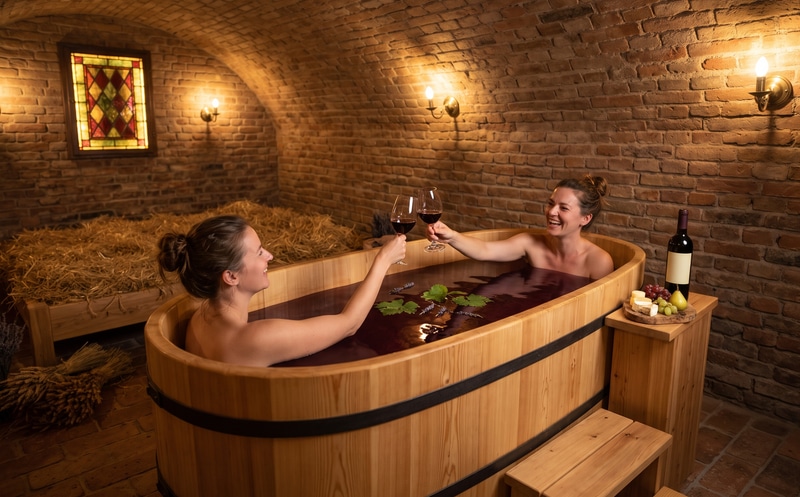
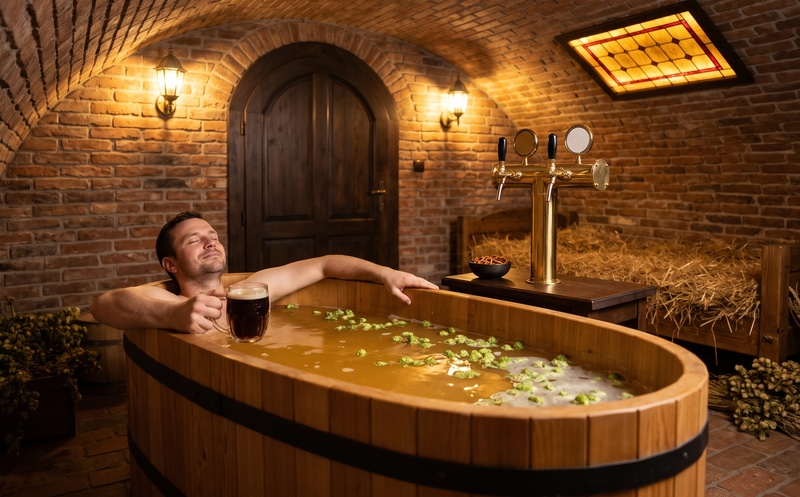
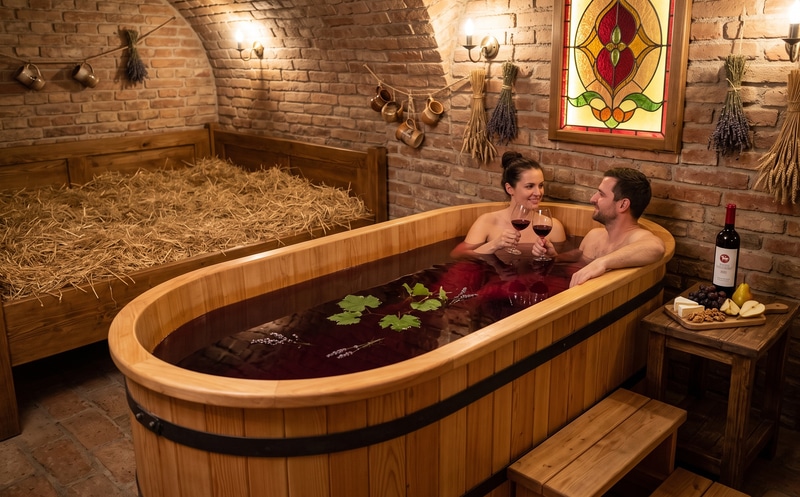
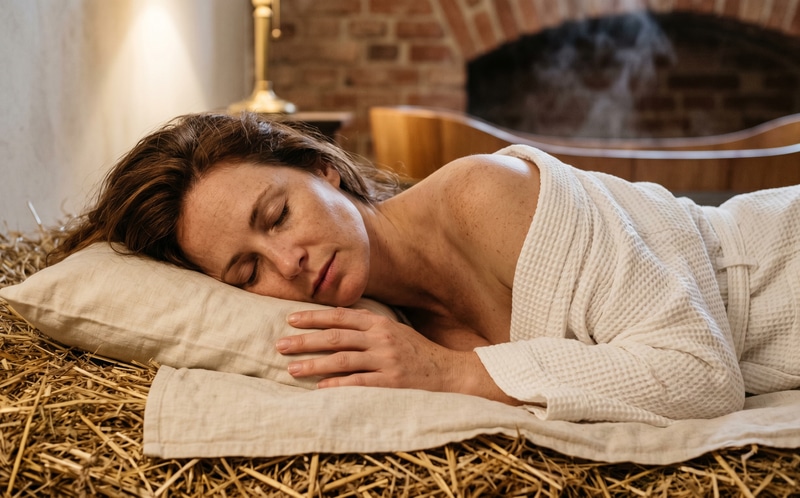
You can see that clearly in the structure of treatments at Lázně Pramen. Both the beer bath and the wine bath follow a simple, reassuring sequence - around 20 minutes in a bath heated to 35-38 C, followed by roughly 50 minutes of rest on a wheat straw bed. That rhythm matters. There is nothing to decide, no need to rush, no demand to perform. You are simply warm, quiet and temporarily free from the next incoming stimulus. In an age of constant mental overload, that kind of simplicity can be surprisingly powerful.
What research says about anxiety, stress and spa recovery
If you are looking at spa treatments for anxiety relief, it helps to separate glossy wellness language from what the evidence actually suggests. Spa rituals are not a substitute for psychotherapy or treatment for serious mental health conditions. They can, however, work as a meaningful supportive layer. This is especially relevant in the context of stress and anxiety, where some compelling data has started to emerge. A 2025 study published on ScienceDirect examined the effect of balneotherapy on anxiety in nursing students and recorded a 51% drop in STAI_AE scores. That is a substantial result, and a useful reminder that warmth, water and a calm environment can have a real impact on subjectively felt anxiety.
The broader picture supports this too. The Wellcome Trust report on relaxation techniques suggests that guided relaxation is far from a niche topic, with a meta-analysis involving thousands of participants indicating benefits for distress and anxiety across different groups. Mayo Clinic adds a practical dimension, noting that relaxation techniques can ease symptoms of stress and improve quality of life. That matters for people who tell themselves they are merely tired. Long-term stress often arrives quietly - worse sleep, shorter patience, a constant inner hum of tension, an inability to properly switch off.
This is where privacy, warmth and the removal of distractions can make a genuine difference. At Lázně Pramen, guests can choose the intimate Rubinovy pramen for 1-2 guests, where treatments start from EUR148 per booking for a beer bath, or the more spacious Zlaty pramen, where 2-4 guests can spend the evening across two baths at the same time. For some people, relief lies in solitude. For others, it is a quiet shared experience with a partner or someone close. That choice is part of mental recovery too - finding the kind of rest that suits your current capacity.
Mindfulness in the bath
Mindful bathing need not mean anything mystical. At its most practical, it simply means stepping out of autopilot and returning your attention to what the body is actually feeling. Water is especially good at narrowing focus to the present moment. You notice the temperature on the skin, the low sound of the whirlpool, the shape of your breathing, the gradual release of muscle tension. If you can leave your phone alone and stop mentally leaping ahead to the next task, the bath becomes more than pleasant. It becomes a reset for the mind.
A simple approach works best. There is no need to overcomplicate it or to worry about whether you are meditating correctly. A few basic cues are enough:
- For the first 5 minutes, slow your breathing and resist the urge to judge the experience.
- Focus on three specific sensations - the warmth of the water, the support under your body and the sounds in the room.
- If your thoughts drift back to work, return to the breath without criticism.
- Do not rush after the bath - the final rest is often the most valuable part for the nervous system.
That is where the treatments at Lázně Pramen have a real advantage: the framework is already in place. The wine bath includes red wine, grape seed extract, vine leaf, honey, herbs and French lavender flowers. The beer bath uses Zatec hops, malt and brewer's yeast. The ingredients matter, but so does the ritual itself - 90 minutes removed from the ordinary flow of the day. For couples or friends, the combo ritual can be especially appealing, with two baths running side by side so each guest can choose their own version. The freedom to decide how rest should look is one of the most overlooked parts of mental hygiene.
Massage as support for mental balance
When people think of massage, they usually think first of stiff shoulders, a sore neck or a back that has had enough of desk work. But touch, pressure and intentional muscle release often have a marked psychological effect as well. When the body stops gripping tension, it sends a different signal to the brain. We feel safer, calmer and less on guard. That is one reason massage can be such an accessible form of supportive care during stressful periods, after punishing work weeks or in phases of general overload. Research cited by AMTA links massage therapy with significant reductions in symptoms of anxiety and depression, along with a moderate reduction in stress.
It also fits neatly into a broader idea of mental upkeep. Not everyone needs an extended retreat or a full wellness weekend. Sometimes what helps most is a regular hour in which the body is finally allowed to unclench. In Safirovy pramen, which functions as a salt cave with 10 tons of salt, guests can book a relaxation or sports massage in a calm, uncluttered setting. A relaxation massage starts from EUR33 for 30 minutes and from EUR50 for 60 minutes per visit. A 60-minute sports massage starts from EUR75. For many guests, this is the most practical format - shorter than a full spa ritual, but still capable of bringing a swift sense of release and mental lightness.
The combination of treatments can be powerful too. Some guests come for massage as a standalone reset. Others begin with a bath and save massage for a later visit. The key is rhythm. Mental wellbeing rarely returns through one grand gesture. More often, it is rebuilt through smaller decisions repeated over time. A regular massage, a private bath, even two hours without notifications - added together, these can do more than the occasional dramatic escape from reality.
What a real reset can look like
Consider a scenario that will feel familiar to plenty of people in office-based work. Petra, 38, manages a small team and spends her days moving between meetings, focused work and late-evening email catch-up. She is not in crisis, but after several months she can feel her mental bandwidth shrinking. Sleep takes longer to come, her patience is thinner, and even weekends fail to create real distance from work. Instead of booking another activity-filled evening, she reserves a private visit with her partner in Rubinovy pramen. She chooses a wine bath from EUR201 per booking because she does not want to organise anything - she simply wants, for a while, to stop operating in performance mode.
What matters is not only the time in the tub, but the arc of the whole evening. On arrival, there is nothing complicated to manage. The treatment has a clear beginning, a clear pace and a clear end. During the bath, the body softens. Afterwards comes rest by the fireplace. What Petra describes as the greatest relief is not euphoria, but silence in her head. No notifications, no decisions, no pressure to produce anything. The next day, the world has not magically changed, of course, but the subjective weight of overload is lower and the return to ordinary life feels more manageable. That is often how good recovery works - not as a miracle, but as a return to equilibrium.
A similar effect can come from an evening for two in Zlaty pramen, where there are two oak baths and where the combo treatment starts from EUR238 per booking for 2-4 guests. Each guest can choose their own option - beer, wine or a combination of both. For couples, that is practical and psychologically valuable too: a shared experience without social pressure. No conversation with strangers, no adapting to a public spa environment. You can simply be together, or sit quietly side by side in your own separate calm. These days, that counts as a genuine luxury for the mind.
How to choose the right treatment
Not every kind of stress feels the same, which is why there is no single treatment that suits everyone. Some people need to quiet an overactive mind. Others need to release tension that has settled into the muscles. Others still are looking for a shared ritual with a partner. So it helps to begin not with the question of what feels most luxurious, but what feels most useful right now. If decision fatigue is part of the problem, keep it simple. If what you need is a longer break from the usual pace, choose a format that gives you more time to settle.
A practical guide looks like this:
- For a quiet reset alone or as a pair, choose Rubinovy pramen with one bath - a beer bath here starts from EUR148 per booking.
- For couples or a smaller group of 2-4 guests, Zlaty pramen is ideal, and it is the only room with two baths running simultaneously. Two beer baths here start from EUR190, two wine baths from EUR268, and the beer-plus-wine combination from EUR238 per booking.
- If you want a longer, premium ritual for 1-2 guests, choose Smaragdovy pramen with its cedar phytosauna. V.I.P. Beer SPA starts from EUR293 and V.I.P. Wine SPA from EUR326 per visit.
- If muscle tension is the bigger issue than the bath itself, consider a massage in Safirovy pramen.
It is also worth thinking about the atmosphere after the treatment. Lázně Pramen recommends avoiding soap for around 2 hours after the bath so the extracts can remain active on the skin for longer. Psychologically, something else matters just as much: do not plunge straight back into chaos. Avoid scheduling another meeting, errands or late-night work immediately afterwards. If relaxation is going to have a real effect on the mind, it needs an afterglow. That is often the difference between a pleasant experience and genuine restoration.
Why mental wellbeing is defining wellness now
There is a reason mental wellbeing and recovery have moved to the centre of the wellness conversation. After years of high work intensity, digital overload and blurred boundaries between working time and personal time, wellness is returning to its original purpose - not as theatrical luxury, but as thoughtful care for body and mind. The Global Wellness Institute defines a spa as a place devoted to overall wellbeing through a variety of professional services that encourage the renewal of body, mind and spirit. That shift matters. A good spa today is not simply beautiful. It is functional, restorative and intentionally designed.
Current travel and wellness trends reflect exactly that. Increasingly, people are not looking only for an experience, but for a tangible sense of relief - better sleep, less tension, a greater ability to switch off. The wellness tourism review published on PMC shows that psychological wellbeing and quality of life are among the key dimensions of health benefit in wellness travel. In other words, what was once treated as an optional extra is now a legitimate part of how people maintain themselves. At a time when so many are always available, any place where you are allowed to be unavailable gains real value.
That is one reason private treatments have become so compelling. At Lázně Pramen, the format is intimate rather than anonymous, built around private rooms that can be explored among the main services and then booked via online booking. Whether a guest chooses a classic bath, a longer V.I.P. ritual in Smaragdovy pramen or a massage in Safirovy pramen, the common thread is privacy, rhythm and the absence of chaos. Those are not decorative details. For an overloaded mind, they are often exactly what is missing from the average week.
When to book and what to expect
The best moment to book is rarely the point at which you are already completely depleted. It is far smarter to think of relaxation as ongoing maintenance for mental wellbeing. If you have come through an intense stretch at work, several weeks without proper rest, or simply have the sense that your mind will not stop even in the evening, that is usually the signal to slow down before fatigue hardens into irritability, insomnia or full burnout. A spa ritual is not an escape from reality. It is a short, clearly bounded space in which body and mind can move back toward balance.
At Lázně Pramen in Prague 6, you can choose a shorter or longer format depending on how much time and energy you have. For a classic 90-minute reset, there is the beer bath from EUR148 per booking or the wine bath from EUR201. If you want a longer premium ritual for 1-2 guests, Smaragdovy pramen offers V.I.P. Beer SPA from EUR293 and V.I.P. Wine SPA from EUR326. And if a bath is not what you need right now, but targeted release from tension is, consider a massage in the salt environment. Booking is simple through the reservation page.
If you are unsure what to choose, the best approach is to get in touch via contact and describe what you want from the visit - silence, an evening together, a longer recovery ritual or a quick mental reset. And if you want to give rest to someone else, gift vouchers are available with 12 months validity. In a culture where attention is fragmented and calm is scarce, a well-chosen visit can be one of the most practical things you do for your mental wellbeing. Not as a one-off treat, but as a conscious decision that the mind deserves recovery too.
Sources
- PMC - Spa therapy efficacy in mental health and sleep quality disorders - pmc.ncbi.nlm.nih.gov
- Wellcome Trust - Effectiveness of relaxation techniques report - cms.wellcome.org
- Psychiatry.org - Relaxation techniques for mental wellness - www.psychiatry.org
- ScienceDirect - Evaluation of balneotherapy effectiveness for anxiety reduction - www.sciencedirect.com
- AMTA - Research shows impact of massage for mental health - www.amtamassage.org
- Mayo Clinic - Relaxation techniques to lower stress - www.mayoclinic.org