
Why warm water wakes up your circulation
Your circulation is the body's transport network. It delivers oxygen, nutrients and warmth to every cell, then carries the waste back out again. When that network is supple and well supplied, you feel fresh, your hands and feet stay warm, and your mind works clearly. When it slows, fatigue creeps in, the extremities turn cold, the legs feel heavy and everything stiffens. Heat happens to be one of the simplest and oldest ways to coax blood flow back into motion, and that is exactly where the appeal of a warm bath begins.
Lower yourself into water warmed to 35-38 degrees Celsius and your body responds at once. The vessels in the skin and the tissue just beneath it widen, drawing blood towards the surface so the body can shed any excess heat. Physiologists call this vasodilation. Wider vessels offer blood less resistance, the heart no longer has to push so hard against pressure, and blood reaches even the most distant capillaries in your toes. That is why so many people feel a pleasant tingling warmth in limbs that were cold only minutes earlier.
In our private rooms in Dejvice we work with this principle in the most natural way. A bath at Lázně Pramen is not about extreme temperatures or shock treatments; it is a gently warm setting in which the body slowly lets go. The aim is relaxation and recovery, not a stress test. That very moderation is what turns the warm bath into a ritual you can return to, one that leaves you rested rather than drained.
In the chapters that follow we will look at exactly what unfolds inside your vessels during a bath, the part played by the water's hydrostatic pressure, why the pairing of heat and rest on a bed of straw works so well, and how to enjoy the whole thing safely. Everything rests on established physiology and on the reality of our procedures, not on marketing promises.
Vasodilation: what heat does to your blood vessels
Vasodilation is simply the technical name for the widening of blood vessels. The walls of arteries and arterioles contain smooth muscle that can both tighten and relax. Warmth tells that muscle to loosen, the channel inside opens up, and blood flows through more easily. This is how the body manages its own temperature: when it overheats, it sends more blood to the surface of the skin so the excess can radiate away. In a warm bath the whole mechanism starts on its own within the first few minutes.
The effect is twofold. First, blood supply to the skin and muscles improves, bringing a sense of warmth and a release of tension. Second, peripheral resistance drops slightly - the resistance the heart has to pump against. Research into heat physiology suggests that regular warming can have a favourable effect on the endothelium, the lining of the vessels that is so central to the health of the entire circulatory system. Heat acts here as a gentle, natural workout for vascular flexibility.
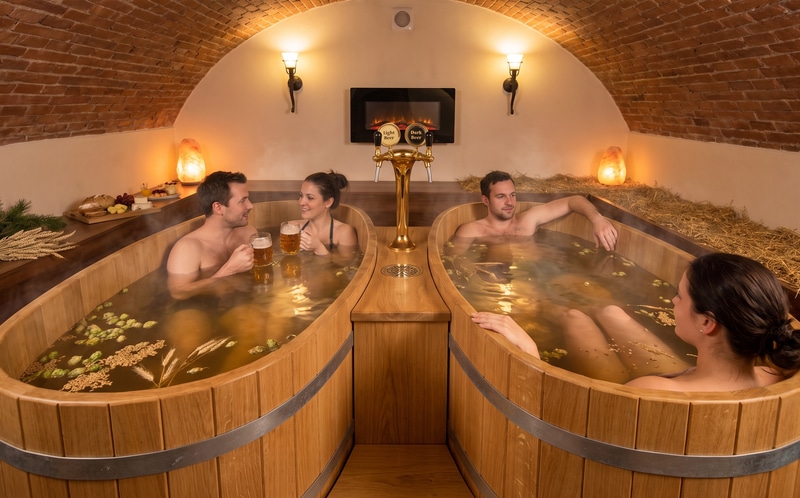
Our beer bath and wine bath both take place in water at 35-38 degrees Celsius. That range is warm enough to widen the vessels and let the body unwind, yet gentle enough that it does not tax the circulation the way scalding steam or a high-temperature sauna might. The bath itself lasts around twenty minutes - long enough for the relaxing effect to settle in fully, without any risk of overheating.
Once you step out, the vessels gradually return to their resting state and the body finds its balance again. It is precisely this shift from warming to rest that produces that distinctive sense of deep, comfortable release. Many guests describe staying warm for a long while afterwards, finally rid of the cold feet that had nagged at them all day. It is a vivid reminder of how sensitively your circulation answers to the temperature around it.
The water's pressure and venous return
Water acts on the body through more than heat alone. Sink into the bath and a layer of water surrounds you, pressing in from every side. This is hydrostatic pressure, and it grows stronger with depth - so it bears down harder on the feet and calves than on the chest. For the circulation this turns out to be a real ally. The pressure gently squeezes the surface veins in the legs and helps push blood back up towards the heart.
Venous return - the journey of blood from the legs back to the heart - is often a weak point in the body's daily routine. Sit or stand for hours and blood pools in the legs, the veins fill up, and a heavy, tired feeling sets in. Immersion works rather like a soft compression aid: the water helps blood overcome gravity and rejoin the flow. Studies of hydrotherapy describe how warm-water immersion supports venous return and can have a favourable influence on circulating blood volume.
In both the beer bath and the wine bath, the whirlpool adds to this effect. Gentle jets of water massage the skin and muscles, lift the blood supply to the surface tissues, and deepen that pleasant sense of lightness in the legs. This is not the intensive hydrotherapy of a rehabilitation clinic; it is an easy, relaxing massage by water that rounds out the whole feeling of letting go.
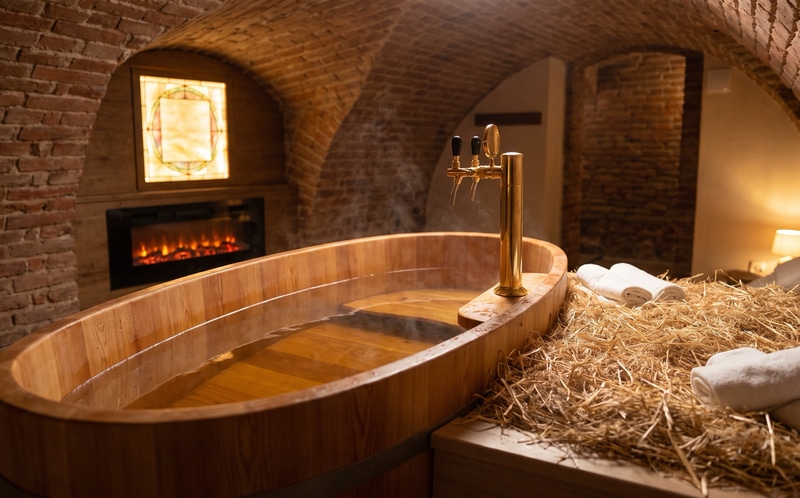
For guests who spend their days on their feet, or conversely glued to a desk, this lightness in the legs is often the most memorable part of the visit. So when you climb out of the bath, it pays to rest a while longer with your legs raised. In each of our rooms a bed of wheat straw waits for exactly that, a place where the body can settle and the circulation can even itself out after the warmth of the water. Heat, water pressure and the rest that follows form one smooth, logical whole.
Heat, rest on the straw and a slower pulse
The bath itself is only half the procedure. Here the time in the water runs to about twenty minutes, followed by roughly fifty minutes of rest on a bed of wheat straw. From the circulation's point of view this phase is absolutely central, because it is here that the body switches from being warmed through to deep relaxation. Many guests underestimate it at first, yet it is that long rest that turns a bath into a genuine ritual of recovery.
Lie down in warmth and quiet after the bath and your heart rate gradually falls; the body shifts out of its active mode and into rest. The parasympathetic nervous system takes over - the branch that governs calm, digestion and repair. Resting in the warmth after a soak encourages a sense of deep release, slower breathing and a quieter mind. For many people it is the first moment all day when they truly come to a stop.
The straw, meanwhile, holds the warmth of the bath and keeps you comfortably toasty, so the body does not cool too quickly and the transition stays gentle. The warmth and glow of the fireplace - part of Zlatý pramen, Rubínový pramen and Smaragdový pramen alike - completes an atmosphere in which the tension of the day simply melts away. The body gets a clear signal that it is safe and free to recover.
This cycle of warming and release is precisely what makes the bath so good for an all-round sense of wellbeing. There is no sudden overheating, no strain - just a gentle ebb and flow between heat and calm that mirrors the body's own rhythms. So when the procedure ends, guests typically leave pleasantly tired, warm and unwound rather than worn out. And that state, with the pulse settled and the muscles loose, is the perfect way to close a demanding working week or to set yourself up for a restful night's sleep.
Hops, yeast and grape seeds: what is in the water
Heat and water pressure underpin every bath, but what sets the beer and wine baths apart are the natural ingredients dissolved in the water. The beer bath uses real dark craft beer, Saaz hops, brewer's yeast and malt. We add them to the bath right in front of you, so you can be sure the soak is fresh and honest. Hops, yeast and malt are rich in compounds that are kind to the skin and give the procedure its unmistakable scent.
The wine bath brings red wine, grape-seed extract, vine leaf, honey, herbs and French lavender flowers. Grape seeds have long been prized for their antioxidants, the polyphenols in particular. These are a familiar fixture in skincare, and their presence in warm water - when the vessels in the skin are open and the complexion well supplied with blood - creates a pampering that works from the inside out.
For the circulation, what matters most is the heat and the water pressure described above. The ingredients add the skincare and the sensory pleasure: the scent, the colour, the soft feel on the skin. After the bath we suggest one simple but effective thing - do not wash the beer or wine extract off with soap for about two hours afterwards. Your skin stays softer and more supple, and the effect can last a day or two.
If you want to bring both worlds together, we offer a beer and wine combination in two baths at once. It is available only in Zlatý pramen, the one room with two oak baths, and suits a group of up to four. Everyone can pick their favourite element while sharing the same atmosphere. Whether you go for beer, wine or both, the underlying principle holds: warm water opens the vessels, the body relaxes, and the natural ingredients look after your skin.
The cedar phyto-barrel and the V.I.P. ritual for deep warming
If you would like to take the warming a step further, there is Smaragdový pramen, our V.I.P. room. Alongside the bath and whirlpool, its centrepiece is a cedar phyto-barrel - a small cabin of Siberian cedar that you step into up to the neck, leaving your head outside. Inside, steam from herbal infusions warms the body. Because the head stays out, the warming is very kind to the breathing and you stay comfortable throughout. This is not a Finnish sauna; it works not on dry heat but on gentle herbal steam.
All the V.I.P. rituals take place in Smaragdový pramen and are reserved for one or two guests only. The V.I.P. Beer SPA opens with fifteen minutes in the cedar phyto-barrel, moves on to a relaxing massage or a scrub, and culminates in a beer bath followed by a rest on the straw beside the fire. This package starts at 293 EUR per reservation and includes unlimited light and dark beer with refreshments.
The V.I.P. Wine SPA follows the same shape, but the bath is a wine one and a bottle of wine arrives with a fruit and cheese plate. This ritual starts at 326 EUR per reservation. The most exclusive option is the Delux Wine SPA for a single guest, with a grape-seed scrub, a body wrap, a full-body massage with grape-seed oil and a glass of wine to finish. Prices begin at 326 EUR per reservation, and it is the only package that also includes the loan of a bathrobe.
From the circulation's perspective, this order is a thoughtful sequence. First, gentle warming in the cedar barrel to set the blood flowing; then a massage to loosen the muscles and lift the supply to the tissues; next the warm bath with its vasodilation and venous return; and finally the long rest that brings everything to calm. The whole ritual runs around two and a half to three hours and is built so the body moves through gradual, gentle stages of warming and release, never through abrupt shifts. It is an ideal way to give both your circulation and your mind some genuinely generous care.
How to relax safely and when to take extra care
A warm bath is a pleasant, relaxing experience that poses no problem for most healthy adults. Even so, it is worth approaching the warmth with a little common sense, because heat and water pressure are active physiological stimuli to which the body responds. A few simple habits will help you enjoy the visit fully and leave feeling refreshed.
- Drink plenty of water before and after the bath - heat encourages sweating, and the body needs to replenish its fluids.
- Do not get in straight after a heavy meal, nor on a completely empty stomach; a light snack with some time in between is ideal.
- When you step out of the bath, rise slowly. Heat widens the vessels, and standing up too fast can bring a brief moment of dizziness.
- Stick to the recommended time in the water, around twenty minutes, and give the rest to resting on the straw.
- If you feel queasy, notice your heart pounding or grow uncomfortably hot during the bath, end your time in the water and lie down calmly.
The water in both the beer bath and the wine bath sits at 35-38 degrees Celsius, a temperature chosen precisely to be comfortable and gentle. These are not hot baths or demanding thermotherapy. Even so, any warming places certain demands on the circulation, which is why it is wise to listen to your body. A sense of pleasant warmth and ease is the right one; a feeling of overheating or nausea is a signal to slow down.
Our baths and massages are not suitable for everyone. Among the situations that call for extra caution, or for skipping the procedure altogether, are cardiovascular conditions, pregnancy, acute inflammation and fever, open wounds or skin infections, epilepsy and allergies to any of the bath ingredients. You will find the full list of contraindications in our terms and conditions, in article 9. If you live with any chronic condition of the circulatory system, or are simply unsure, we recommend talking to your doctor beforehand. The safety and comfort of our guests always come first.
Give your circulation a calm warm bath in Dejvice
You will find Lázně Pramen at Dejvická 255/18 in Prague 6, just a two-minute walk from Hradčanská metro station. We are open Monday to Friday from 10:00 to 22:00 and at weekends from 10:00 to 23:00, so we fit easily into an after-work evening or a leisurely weekend. The whole experience unfolds in the privacy of one of our rooms, with nobody to disturb you.
If you are a couple, or arriving on your own and after something intimate, Rubínový pramen is ideal, with its single larch bath, fireplace and bed of straw. A beer bath here starts at 148 EUR per reservation, while a wine bath with a bottle of wine in the room begins at 201 EUR per reservation. The price is always for the whole reservation rather than per person, so two guests sharing one bath pay the same as one.
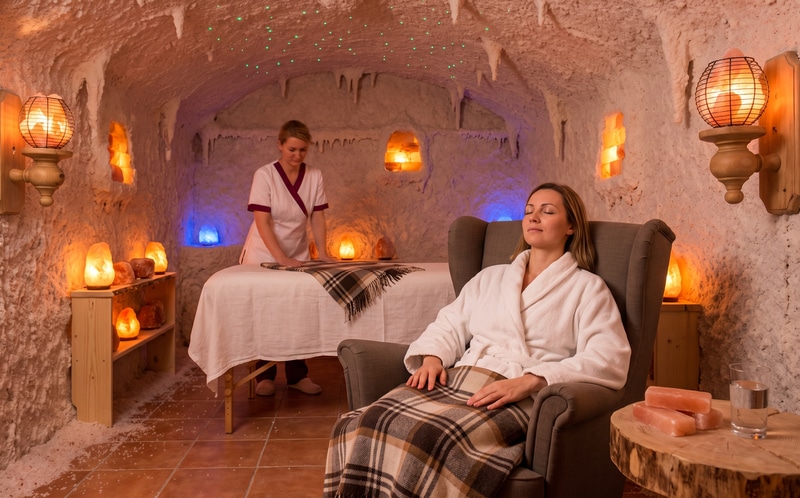
For a group of up to four, there is Zlatý pramen with its two oak baths. Here you can run two baths of beer, two of wine, or the beer and wine combination at once, from 238 EUR per reservation. To the warmth of the water you can add a massage in the Safírový pramen salt cave, where a relaxing massage starts at 33 EUR and further lifts the blood supply to the muscles while easing tension.
Booking takes only a moment through the reservation form on our website, where you choose the date, the number of guests and the bath setup. If you would like to treat someone close to you, we also offer gift vouchers valid for twelve months, with which the recipient picks their own procedure. With any question at all, do get in touch via our contact page. Give your circulation a calm, warm setting and leave warmed through, unwound and with that lightness in your legs - just as recovery should feel.
Sources
- Crandall CG, Wilson TE: Human cardiovascular responses to passive heat stress (PMC, physiology of heat and blood vessels) - www.ncbi.nlm.nih.gov
- Brunt VE et al.: Passive heat therapy improves endothelial function and arterial stiffness (Journal of Physiology, PMC) - www.ncbi.nlm.nih.gov
- Mooventhan A, Nivethitha L: Scientific evidence-based effects of hydrotherapy on various systems of the body (PMC) - www.ncbi.nlm.nih.gov
- Laukkanen T et al.: Sauna and heat exposure - association with cardiovascular outcomes (Mayo Clinic Proceedings) - www.mayoclinicproceedings.org
- Harvard Health: The hidden risks of poor circulation and how heat helps blood flow - www.health.harvard.edu